Video
 Watch Video
Reconstructing dynamic 3D scenes from monocular videos is a fundamental yet highly challenging task, as real-world motions often involve both long-term smooth transformations and short-term complex deformations. Existing methods either struggle to maintain temporal consistency or fail to capture high-frequency dynamics due to limited motion modeling capacity.
We present Rigid-aware 4D Gaussian Splatting (RiGS), which simultaneously captures motions across multiple temporal scales. RiGS introduces three types of Gaussian primitives: static, rigid, and transient, which represent static backgrounds, long-term low-frequency motions, and short-term high-frequency dynamics, respectively.
An object-wise dynamic mask aggregates long-range spatiotemporal motion information and guides the decomposition of static and dynamic regions. Rigid Gaussians can transition into transient Gaussians based on their temporal duration, and both are optimized under scene flow guidance, providing dense 3D motion supervision. Extensive experiments demonstrate state-of-the-art performance on novel view synthesis benchmarks.
Watch Video
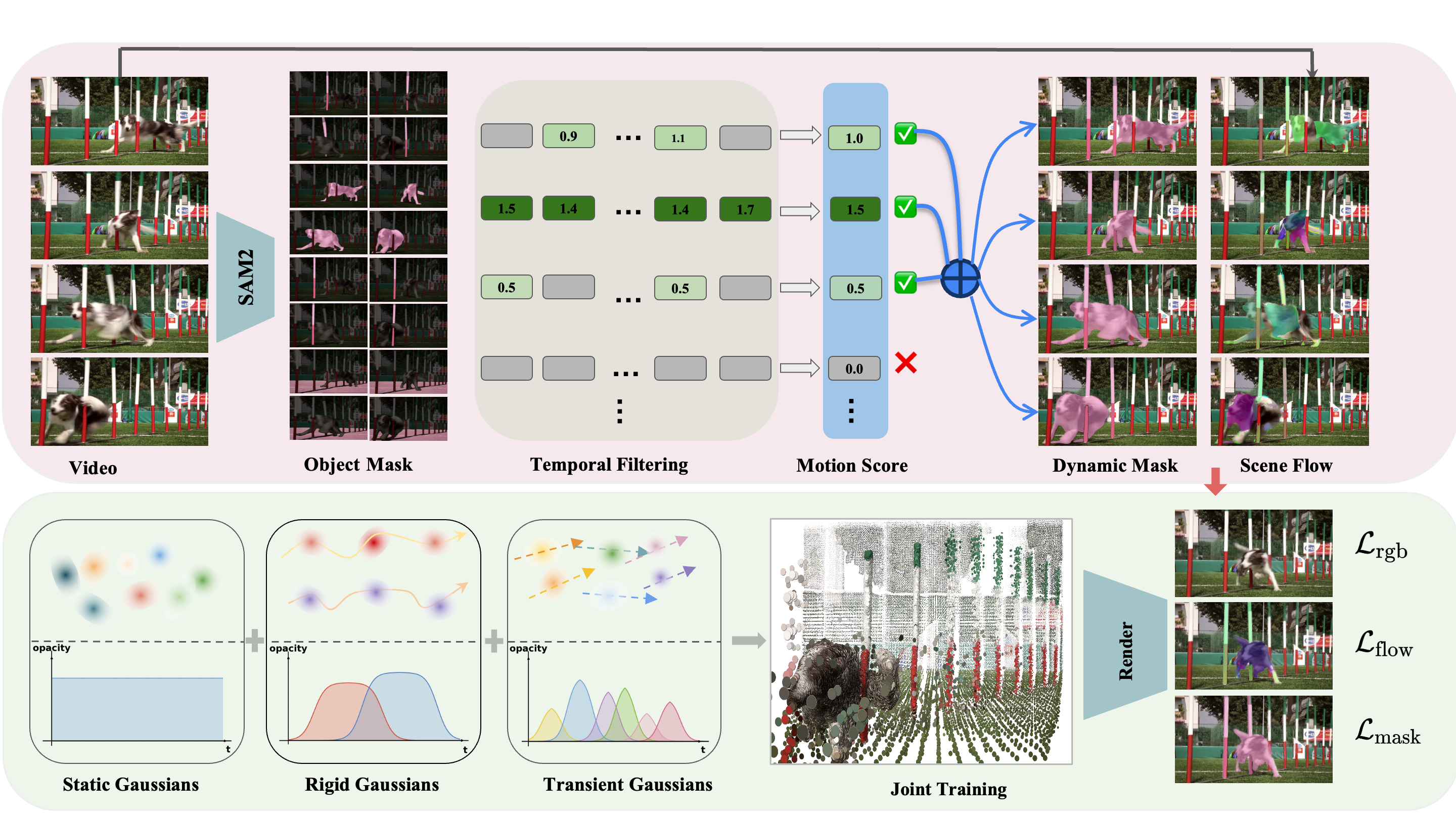
Represent background and temporally stable regions outside the dynamic mask.
Capture coherent long-term motion with low-frequency rigid transformations.
Model fast, short-lived, high-frequency dynamics that rigid motion bases cannot express.
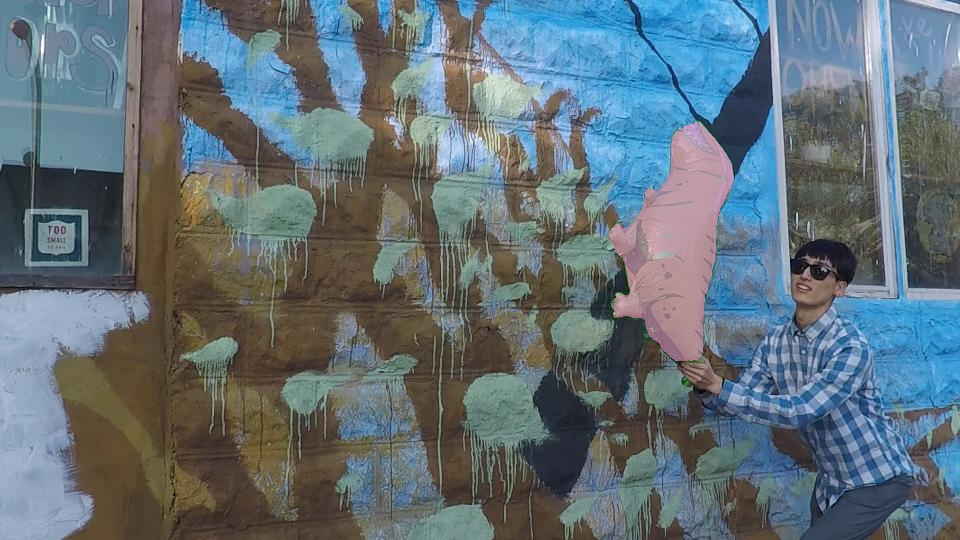
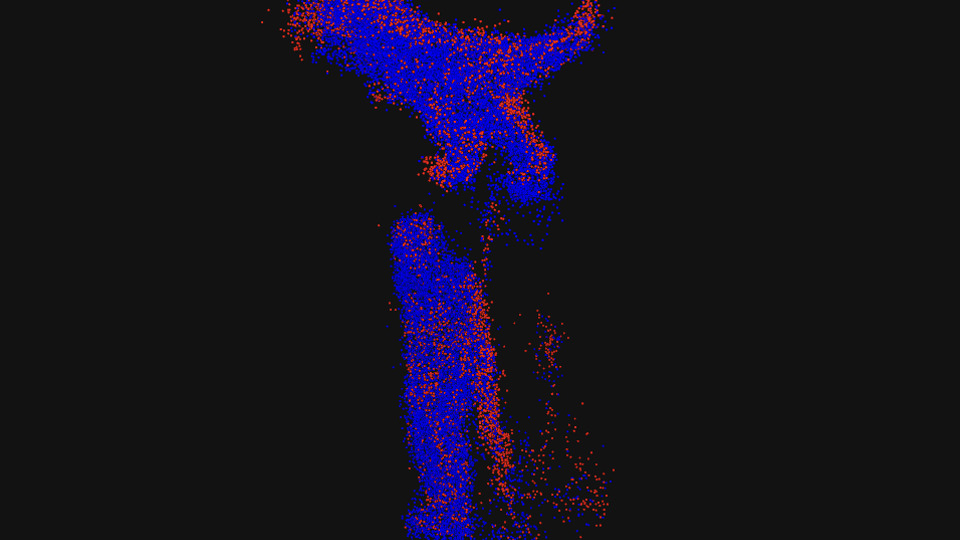
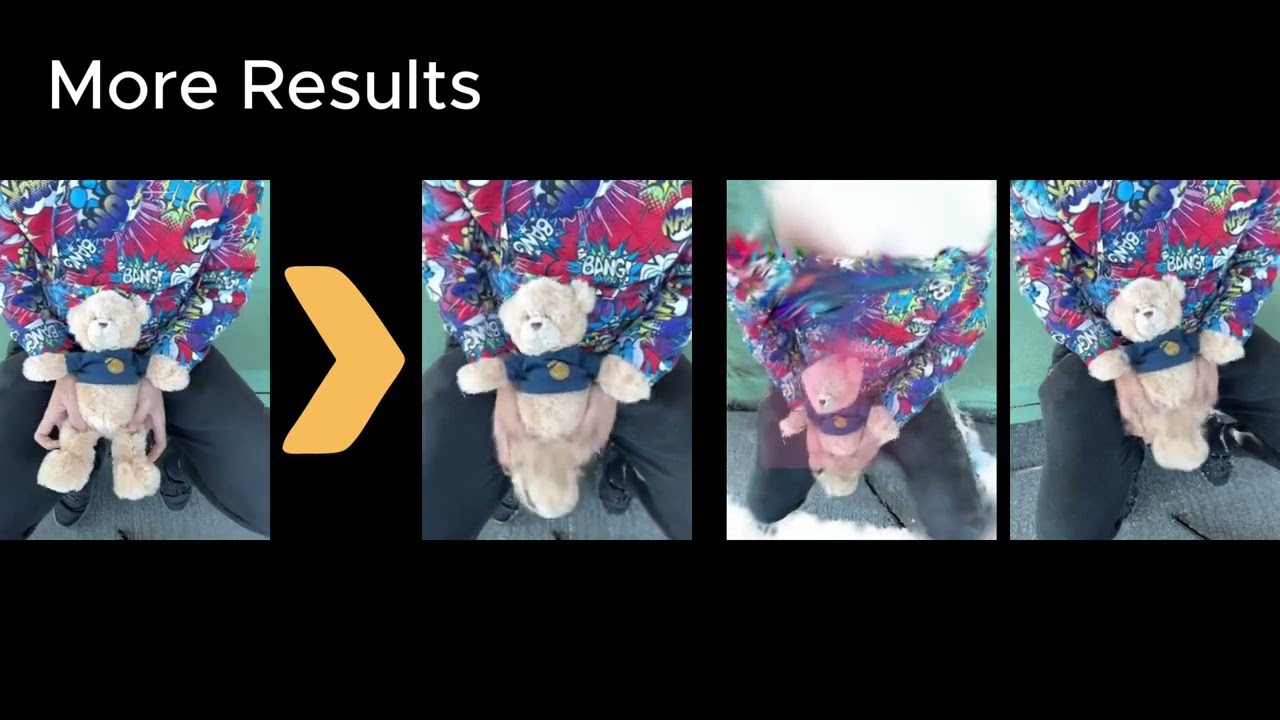
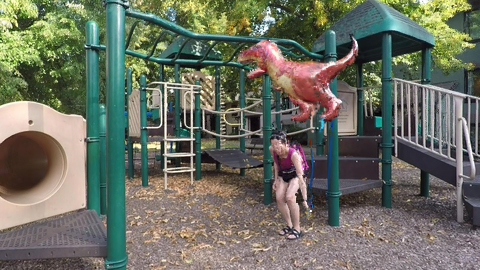
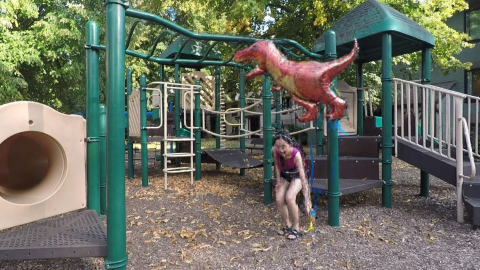
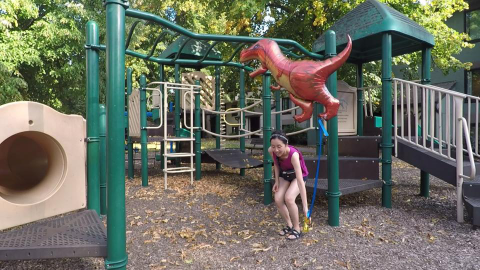
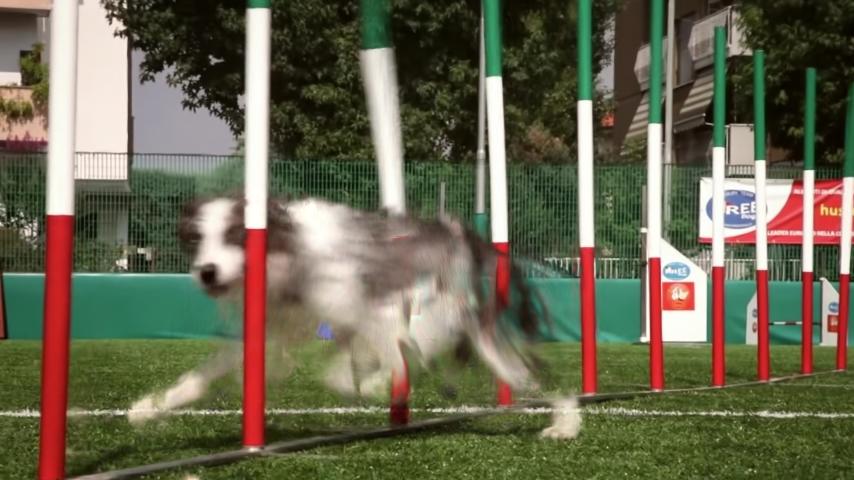
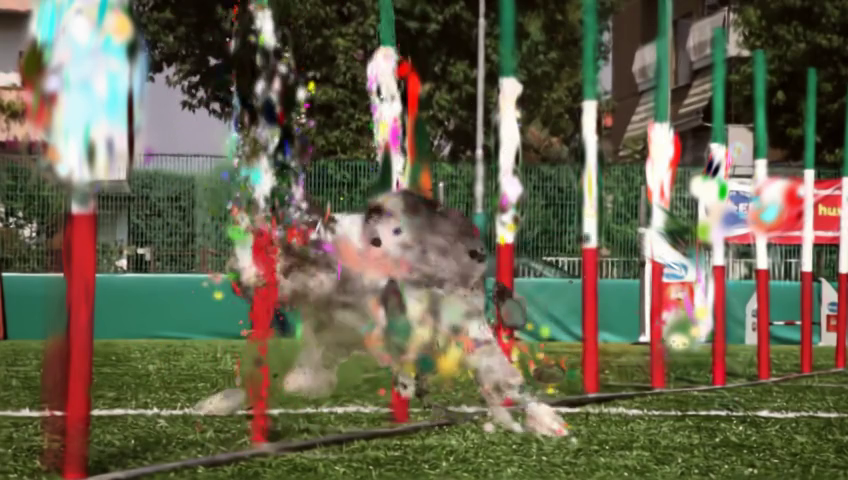
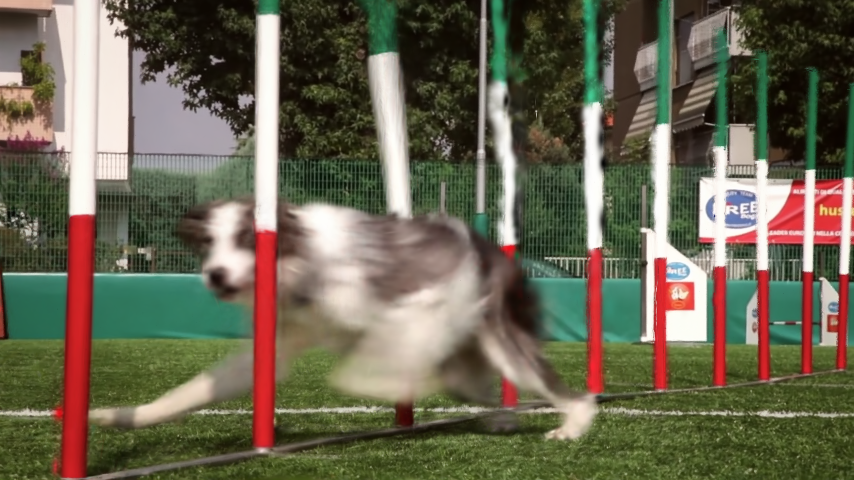
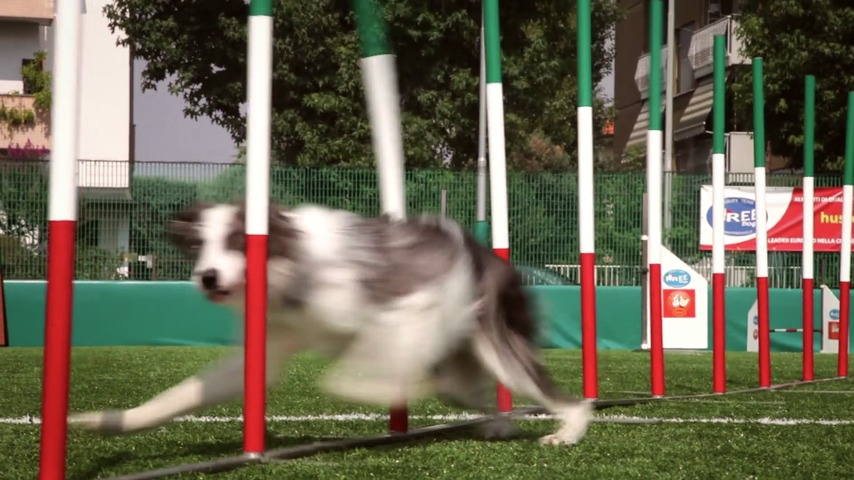
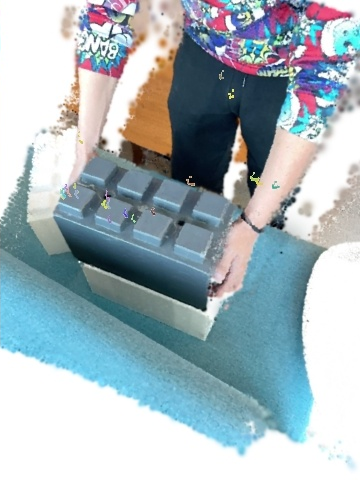
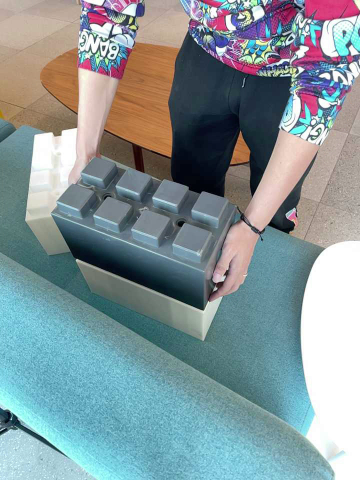
RiGS improves novel view synthesis for scenes with large deformation, complex multi-object motion, and fast transient dynamics.

@misc{wu2026rigsrigidaware4dgaussian,
      title={RiGS: Rigid-aware 4D Gaussian Splatting from a Single Monocular Video},
      author={Chenyu Wu and Wanhua Li and Zhu-Tian Chen and Hanspeter Pfister},
      year={2026},
      eprint={2605.23672},
      archivePrefix={arXiv},
      primaryClass={cs.CV},
      url={https://arxiv.org/abs/2605.23672},
}